The Simpsons & Malcom In the Middle are Isomorphic
I was a math major. A middling student with enough talent and knowledge to know I was never going to be the next Newton.
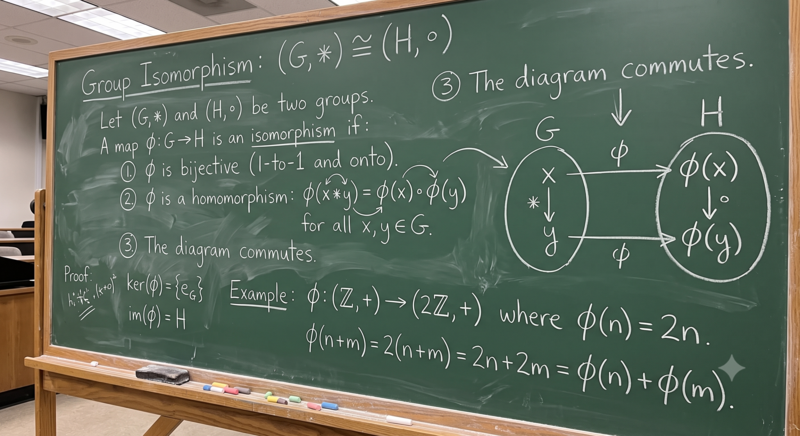
Even so, my favorite class was Abstract Algegra. It was confusing, vexing, and wonderful. I loved learning crazy words like isomorphism. It made me feel (even though I doubted it) smarter than the average bear. So it dawned on me…after watching one of my favorite MITM episodes that “The Simpsons” and “Malcom in the Middle” are isomorphic.
So, don’t take it from me, ask AI…
You can map the underlying topology of both shows almost perfectly. Both were created as direct antidotes to the saccharine, moralizing family sitcoms of their respective eras, but the structural isomorphism becomes impossible to ignore when you align the core family nodes.
The Character Mapping
| Archetype | The Simpsons | Malcolm in the Middle | Shared Structural Function |
|---|---|---|---|
| The Patriarch | Homer | Hal | Driven by pure impulse and manic hyper-fixation, yet deeply devoted to his wife despite being useless as an authority figure. |
| The Matriarch | Marge | Lois | The highly stressed, exhausted load-bearing pillar acting as the sole barrier between the family and absolute ruin. |
| The Genius | Lisa | Malcolm | Highly intelligent, alienated from their peers, deeply anxious, and prone to extreme self-righteousness. |
| The Id | Bart | Reese | The agent of physical chaos who thrives on destruction, poor impulse control, and bullying. |
| The Overlooked | Maggie | Dewey | The neglected youngest child who survives by retreating into a bizarre inner world, later revealing surprising artistic gifts. |
The Shared Environmental Variables
Beyond the character sheet, the underlying physics of both universes operate on the same rules:
- Financial dread as a plot engine: Both families are perennially one broken appliance away from total collapse. They eat questionable leftovers, wear hand-me-downs, and the tension of their lower-middle-class reality drives a massive percentage of the conflict.
- Toxic Ancestry: Both shows feature a terrifying, highly toxic older generation (Grampa Simpson and Grandma Ida) that perfectly explains the psychological damage and parenting styles of Homer and Lois.
- The Format Subversion: The Simpsons killed the 80s family sitcom by using animation to achieve rapid-fire pacing, cutaways, and a denser joke rate. A decade later, Malcolm did the exact same thing for live-action — dropping the laugh track, using a single camera, and utilizing cutaways to match an almost animated, cartoonish pace.
The only structural variable that doesn’t cleanly map 1:1 is Francis. He operates entirely outside the core node as a satellite character, though you could argue he simply represents what happens to Bart the moment he finally gets kicked out of the house.
My Take
AI will bend the laws of physics to agree with you, but yeah, I’m still pretty sure - QED. As for Francis, I attribute that to the writers understanding chaos theory and that letting loose a butterfly in Hong Kong can create comedic genius.
BigfootInMouth

A blog by Rob Lauer.
 www.linkedin.com/in/rob-lauer-1590513
Search
Recent Posts
- Apache2::Request: Fixing the build
- Introducing Log::Log4perl::Appender::CloudWatchLogs
- Announcing Amazon::API 2.8.0 - A Lightweight AWS API for Perl
- Amazon::S3 v2.1.0 - On Being an S3 Client
- Reflecting on Mirrors - Part II
- Reflecting on Mirrors - Part I
- Phoenix Rising: Why Perl’s Unix Roots Matter More Than Ever
- Abstract Algebra, The Simpsons, and Malcom In in the Middle
- Python 3.15: (Or, How Python is Slowly Becoming Perl)
- Idempotent AWS Resource Creation - with tools you have laying around the house